
Workflow discovery
Map the trigger, inputs, actions and owner of the process you want to improve.
Assess a practical AI automation step within the tools and processes you already use. Start with one repetitive task, clear inputs and a reviewable output.
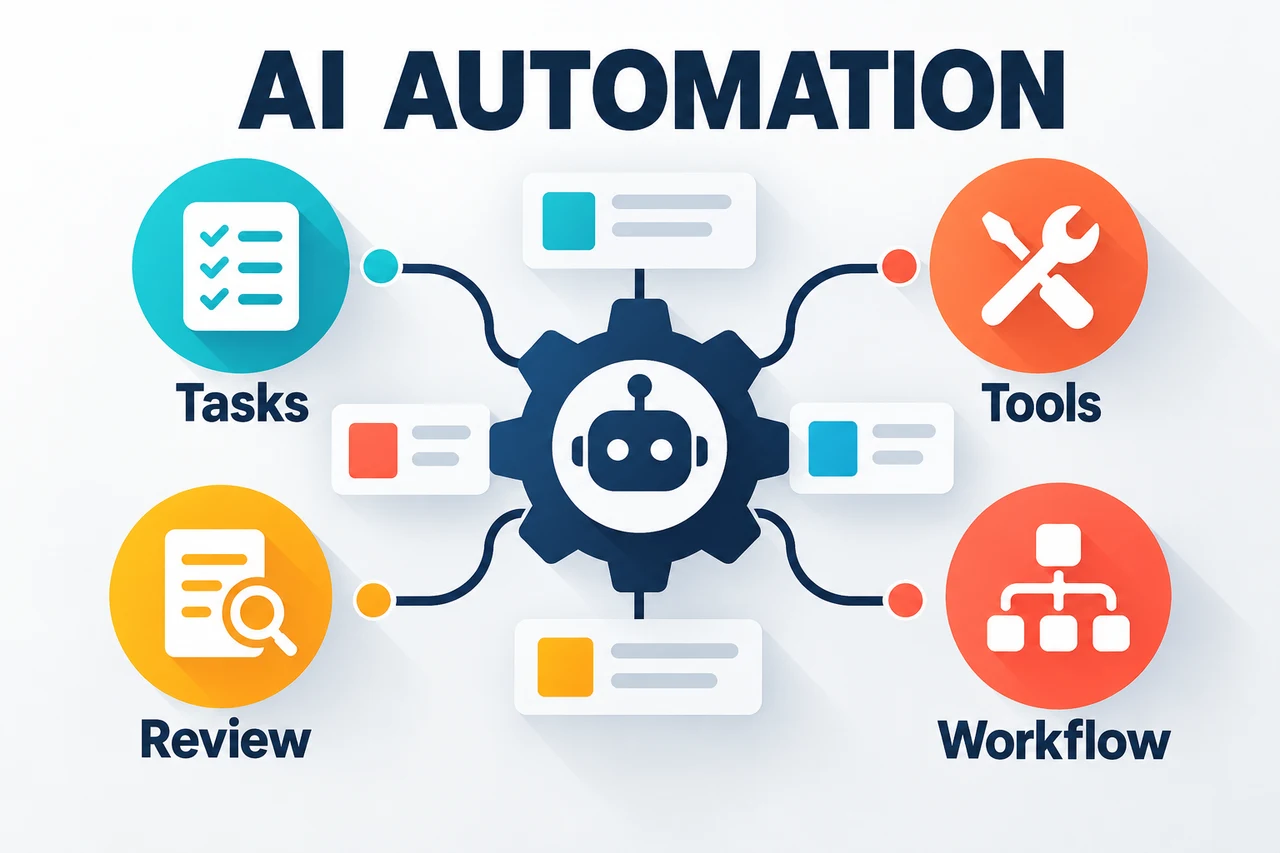
Your proposal confirms the features, tools, dependencies and support included.
Map the trigger, inputs, actions and owner of the process you want to improve.
Plan reminders, routing and draft responses around your existing enquiry workflow.
Assess integrations between your approved CRM, forms and other business systems.
Explore drafting, summarisation or classification where the information and workflow are suitable.
Define when an automation should stop, flag an issue or ask a person to review.
Agree how the workflow will be tested, monitored and maintained after handover.
We start with your current process, agree a focused scope, test the workflow and plan the handover.
We scope the automation around your process. Important approvals and exceptions can remain with your team.
Tool subscriptions, API usage and messaging costs are itemised separately from our project work.
We can assess an approved business messaging workflow. Feasibility depends on the provider, access, account setup and your messaging requirements.
Share your current workflow and the improvement you want to make.
Discuss your project ↗Free initial consultation · Usually a reply within one business day
One repeatable task, sample inputs, approved information and access to the existing tools.
Assess provider fees, permissions, incorrect outputs and a human approval step before connecting systems.
Start with a scoped pilot. Quality review and integration access determine whether to extend it.
Bring a workflow such as classifying enquiries, preparing a document draft or moving reviewed information between tools. Define the inputs, expected output and person responsible for exceptions.
Not every automation needs AI. Deterministic steps can use ordinary rules; language or document interpretation may justify an AI component after accuracy, costs and review requirements are assessed.
Test representative samples, incorrect inputs and handover behaviour. Compare task time and error rates against the current process before deciding whether to widen the pilot.
These examples describe possible project scopes. Share your real workflow to assess suitability and delivery requirements.
An illustrative pilot might organise enquiries or prepare a summary for review. Agree categories and sample inputs so the output can be checked against a defined expectation.
Map where information comes from and where it should go. Review tool access, record fields and the behaviour when a connection fails rather than assuming every system has a usable interface.
Record a baseline for time spent or correction work. Assess the pilot against that baseline and decide whether it is useful enough to extend.
No. Clear, repeatable rules may be implemented without AI. Interpretation or drafting may justify an AI step after assessing quality, cost and review needs.
Share the tools, account access options and required actions. Interfaces and platform restrictions are reviewed before confirming the integration scope.
Yes. A focused pilot can define inputs, expected outputs, exceptions and review responsibilities before a wider system is considered.
A pilot can test that question using a baseline and representative tasks. Time savings or accuracy improvements are measured rather than guaranteed.